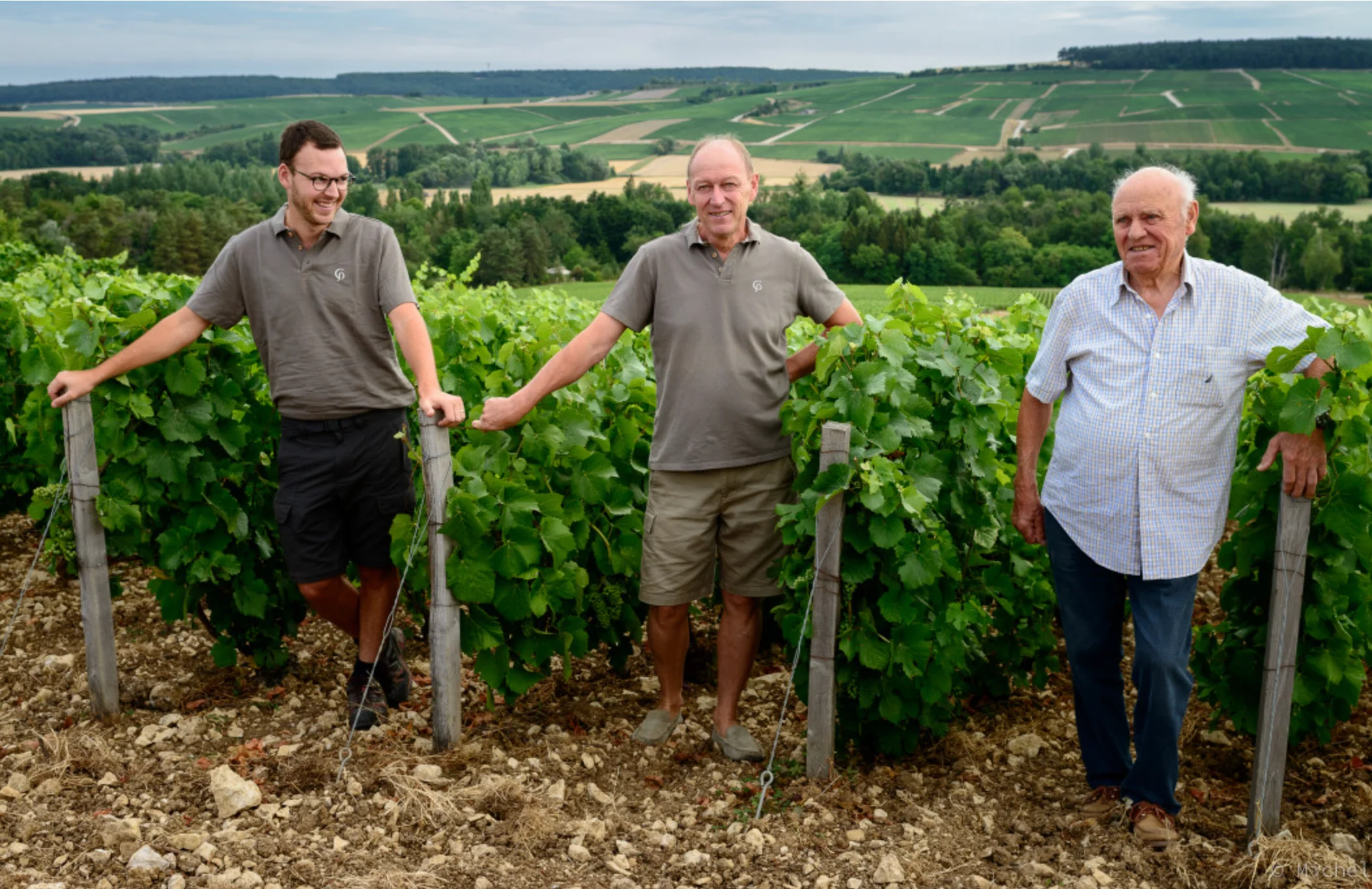
An evening with Champagne Gerbais with Aurélien Gerbais - 3/10/26
We are thrilled to invite you to join us for an intimate evening with Aurélien Gerbais of Champagne Pierre Gerbais on Tuesday, March 10th, from 5 PM to 7 PM in our Cellar Room. This is a rare opportunity to taste with one of the most exciting young winemakers in Champagne—a vigneron who learned his craft in Burgundy and returned to the Aube to make some of the region's most compelling and distinctive Champagnes.
Aurélien Gerbais represents the fourth generation of his family to make Champagne in Celles-sur-Ource, a small village in the Côte des Bar, Champagne's southernmost and most rebellious region. But unlike most Champagne producers who train in Reims or Épernay, Aurélien attended wine school in Beaune, Burgundy, where he studied alongside a generation of future Burgundian stars: Mathilde Grivot of Domaine Jean Grivot, David Croix, Amélie Berthaut, and Armand Heitz. Most importantly, he apprenticed under the legendary Olivier Lamy of Saint-Aubin, who became his mentor and spiritual father in winemaking.
"I feel more Burgundian than Champenois," Aurélien says without hesitation. And it shows. He ferments and ages his reserve wines in demi-muids—not just any barrels, but the actual casks once used by Olivier Lamy for his Saint-Aubin La Chatennière. He approaches Champagne with a Burgundian obsession for terroir, farming organically across 18 hectares of vineyards that sit on the same Kimmeridgian limestone and clay soils that make Chablis and parts of the Côte d'Or so remarkable. In fact, Celles-sur-Ource is geographically closer to Chablis than to the grand cru vineyards of Reims.
The estate's conversion to organic viticulture in the 1990s came at a terrible price. Aurélien's grandmother nearly died after being poisoned by pesticide residue while working in the vineyards. The family immediately abandoned all chemicals and obtained Ampelos certification in 1996—a rigorous sustainable farming standard they've maintained ever since. Today, Aurélien farms with the same meticulous attention to detail he learned from Olivier Lamy, elevating an already impressive estate to new heights.
But what truly sets Pierre Gerbais apart is their preservation of Pinot Blanc—a nearly extinct grape in Champagne. While most producers uprooted their Pinot Blanc in favor of the more fashionable Chardonnay and Pinot Noir, the Gerbais family kept theirs, planted out of sheer necessity in a village where frost and humidity made viticulture treacherous. At one point, the crop ripened successfully only one vintage out of ten. Pinot Blanc's resistance to these conditions made it invaluable, even if Champagne's northern power brokers didn't officially recognize it.
"We cheated on paper—that's why we have Pinot Blanc," Aurélien explains, recounting the south's historic fight to be part of Champagne at all. The CIVC omitted Pinot Blanc from the approved varieties, but they didn't inspect vineyards, and the Gerbais family quietly kept their vines. Today, Pinot Blanc represents an astonishing 25% of the estate's plantings—4 hectares of a grape that accounts for barely 100 acres in all of Champagne's 30,000 acres.
The crown jewel is "Les Ploies," a tiny 0.4-hectare parcel of Pinot Blanc planted in 1904. These are some of the oldest Pinot Blanc vines in Champagne, and they were the very plot that launched the domaine four generations ago. Low-yielding due to their age and suffering from millerandage (which produces smaller, more concentrated berries), these ancient vines give Aurélien extraordinarily intense fruit for his flagship L'Originale cuvée—a 100% Pinot Blanc Champagne that Wine Enthusiast called one of the only such wines in existence.
Since taking over, Aurélien has pushed the estate even further, implementing a perpetual reserve system starting in 2011 to add depth and complexity while maintaining vibrancy. He's constantly experimenting—natural versus organic yeasts, oak fermentation, different malolactic approaches—always blind-tasting his trials with that same tight circle of Burgundian friends. His Champagnes are bone-dry, with minimal dosage and sulfur, letting the purity of the terroir shine through.
Aurélien has emerged as one of the leaders in the Aube's remarkable renaissance, standing shoulder-to-shoulder with fellow visionaries like Cédric Bouchard, Vouette & Sorbée, Ulysse Collin, and Marie Courtin. These producers have transformed the Aube from Champagne's back office into its most exciting frontier—a region where single-vineyard Champagnes, indigenous yeasts, and terroir-driven winemaking have become the norm rather than the exception.
This is a once-in-a-lifetime chance to taste with a winemaker who bridges two of France's greatest wine regions, who preserves varieties on the brink of extinction, and who represents the future of thoughtful, terroir-focused Champagne. Aurélien will personally guide us through a range of his distinctive Champagnes, sharing insights from both his Burgundian education and his deep family roots in the Aube.
Seating is limited for this intimate seminar. Tickets are $50 per person and include a $20 credit towards any Champagne Pierre Gerbais wines purchased.
We hope you'll join us for what promises to be an extraordinary evening.
Original: $50.00
-65%$50.00
$17.50Product Information
Product Information
Shipping & Returns
Shipping & Returns
Description
We are thrilled to invite you to join us for an intimate evening with Aurélien Gerbais of Champagne Pierre Gerbais on Tuesday, March 10th, from 5 PM to 7 PM in our Cellar Room. This is a rare opportunity to taste with one of the most exciting young winemakers in Champagne—a vigneron who learned his craft in Burgundy and returned to the Aube to make some of the region's most compelling and distinctive Champagnes.
Aurélien Gerbais represents the fourth generation of his family to make Champagne in Celles-sur-Ource, a small village in the Côte des Bar, Champagne's southernmost and most rebellious region. But unlike most Champagne producers who train in Reims or Épernay, Aurélien attended wine school in Beaune, Burgundy, where he studied alongside a generation of future Burgundian stars: Mathilde Grivot of Domaine Jean Grivot, David Croix, Amélie Berthaut, and Armand Heitz. Most importantly, he apprenticed under the legendary Olivier Lamy of Saint-Aubin, who became his mentor and spiritual father in winemaking.
"I feel more Burgundian than Champenois," Aurélien says without hesitation. And it shows. He ferments and ages his reserve wines in demi-muids—not just any barrels, but the actual casks once used by Olivier Lamy for his Saint-Aubin La Chatennière. He approaches Champagne with a Burgundian obsession for terroir, farming organically across 18 hectares of vineyards that sit on the same Kimmeridgian limestone and clay soils that make Chablis and parts of the Côte d'Or so remarkable. In fact, Celles-sur-Ource is geographically closer to Chablis than to the grand cru vineyards of Reims.
The estate's conversion to organic viticulture in the 1990s came at a terrible price. Aurélien's grandmother nearly died after being poisoned by pesticide residue while working in the vineyards. The family immediately abandoned all chemicals and obtained Ampelos certification in 1996—a rigorous sustainable farming standard they've maintained ever since. Today, Aurélien farms with the same meticulous attention to detail he learned from Olivier Lamy, elevating an already impressive estate to new heights.
But what truly sets Pierre Gerbais apart is their preservation of Pinot Blanc—a nearly extinct grape in Champagne. While most producers uprooted their Pinot Blanc in favor of the more fashionable Chardonnay and Pinot Noir, the Gerbais family kept theirs, planted out of sheer necessity in a village where frost and humidity made viticulture treacherous. At one point, the crop ripened successfully only one vintage out of ten. Pinot Blanc's resistance to these conditions made it invaluable, even if Champagne's northern power brokers didn't officially recognize it.
"We cheated on paper—that's why we have Pinot Blanc," Aurélien explains, recounting the south's historic fight to be part of Champagne at all. The CIVC omitted Pinot Blanc from the approved varieties, but they didn't inspect vineyards, and the Gerbais family quietly kept their vines. Today, Pinot Blanc represents an astonishing 25% of the estate's plantings—4 hectares of a grape that accounts for barely 100 acres in all of Champagne's 30,000 acres.
The crown jewel is "Les Ploies," a tiny 0.4-hectare parcel of Pinot Blanc planted in 1904. These are some of the oldest Pinot Blanc vines in Champagne, and they were the very plot that launched the domaine four generations ago. Low-yielding due to their age and suffering from millerandage (which produces smaller, more concentrated berries), these ancient vines give Aurélien extraordinarily intense fruit for his flagship L'Originale cuvée—a 100% Pinot Blanc Champagne that Wine Enthusiast called one of the only such wines in existence.
Since taking over, Aurélien has pushed the estate even further, implementing a perpetual reserve system starting in 2011 to add depth and complexity while maintaining vibrancy. He's constantly experimenting—natural versus organic yeasts, oak fermentation, different malolactic approaches—always blind-tasting his trials with that same tight circle of Burgundian friends. His Champagnes are bone-dry, with minimal dosage and sulfur, letting the purity of the terroir shine through.
Aurélien has emerged as one of the leaders in the Aube's remarkable renaissance, standing shoulder-to-shoulder with fellow visionaries like Cédric Bouchard, Vouette & Sorbée, Ulysse Collin, and Marie Courtin. These producers have transformed the Aube from Champagne's back office into its most exciting frontier—a region where single-vineyard Champagnes, indigenous yeasts, and terroir-driven winemaking have become the norm rather than the exception.
This is a once-in-a-lifetime chance to taste with a winemaker who bridges two of France's greatest wine regions, who preserves varieties on the brink of extinction, and who represents the future of thoughtful, terroir-focused Champagne. Aurélien will personally guide us through a range of his distinctive Champagnes, sharing insights from both his Burgundian education and his deep family roots in the Aube.
Seating is limited for this intimate seminar. Tickets are $50 per person and include a $20 credit towards any Champagne Pierre Gerbais wines purchased.
We hope you'll join us for what promises to be an extraordinary evening.